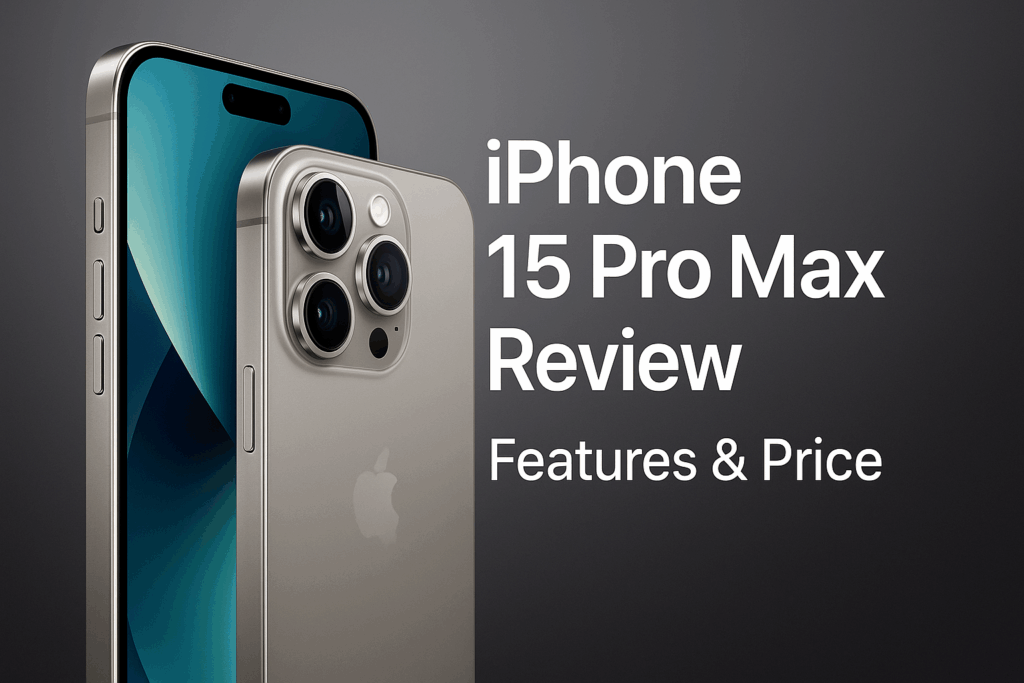
For nearly a decade, the smartphone industry has been on a relentless quest for the perfect screen. We’ve journeyed from the era of thick, chunky bezels to the arrival of the infamous “notch,” which then gave way to the more subtle but still present “hole-punch.” Each step has been a move towards a singular, futuristic dream: a truly uninterrupted, all-screen device. A seamless sheet of glass that is pure content, edge to edge. In 2025, that dream is no longer a distant fantasy seen only in concept videos. It’s a reality, and its arrival signals the true end of the notch era. The technology responsible for this final, revolutionary leap is the Under-Display Camera (UDC).
This is a technology that has been whispered about in tech circles for years, a holy grail of smartphone design. Early attempts were promising but flawed, often dismissed as gimmicks. But now, after years of intense research and development, UDC technology has finally matured. It’s beginning to appear in mainstream flagship devices, offering a glimpse into a future free from visual interruptions. For the tech-savvy user in Nigeria, whose smartphone is often their primary screen for everything from watching Nollywood blockbusters to conducting business video calls, this is a monumental development. Let’s decode this incredible technology, explore how it works, and discuss what it truly means for your mobile experience.
What is an Under-Display Camera? The Science Explained Simply
The concept of placing a camera *underneath* the pixels of a display sounds like something out of science fiction. How can a camera see through a screen that is actively emitting light? The solution is a breathtaking combination of advanced hardware and incredibly intelligent software.
The simplest analogy is to think of it like a very advanced **two-way mirror**. You can see your reflection (the display’s image), but the person on the other side (the camera sensor) can see you right through it. To achieve this, engineers have made two key breakthroughs:
1. The Transparent Display Area
A modern flagship phone uses an OLED display, where each pixel is its own tiny light source. In a phone with a UDC, the small, circular area of the screen that sits directly on top of the camera lens is specially engineered. The pixels in this specific zone are arranged in a different pattern with a lower density, creating microscopic gaps that are invisible to the naked eye but large enough for light to pass through. Furthermore, the materials used for the circuitry and cathodes in this section are made from highly transparent materials that don’t block the camera’s view.
2. The Software and AI Magic
Even with a transparent screen, the light that reaches the camera sensor has still passed through a pixel grid. This can cause a slight haze, reduce sharpness, and create a diffraction pattern (like a subtle rainbow effect). This is where the AI brain of the phone, the Neural Processing Unit (NPU), comes in. When you take a selfie with a UDC, the phone’s AI instantly kicks in. It runs a series of complex algorithms that have been trained on millions of images to:
- De-haze the image: It intelligently removes the slight fogginess caused by the screen layer.
- Enhance Sharpness: It reconstructs the fine details that were softened by the pixels.
- Correct Colour and Light Diffraction: It neutralizes any colour shifts or patterns caused by the light passing through the display.
This entire process happens in a fraction of a second. The final photo you see is a “computationally restored” image, a perfect blend of hardware optics and software intelligence.
The Evolution: From Gimmick to Game-Changer
It’s important to acknowledge that the journey here has been a long one. The first generation of UDC phones, launched a few years ago by brands like ZTE, were noble experiments but ultimately flawed. The selfie quality was noticeably soft and hazy, and if you looked closely, you could easily see the “pixel patch” on the screen where the camera was hiding. It was a technology that wasn’t quite ready for prime time.
What has changed in 2025? The technology has matured across the board. The transparent display materials are now more transparent. The pixel density over the camera is much higher, making the patch area virtually indistinguishable from the rest of the screen in normal use. Most importantly, the AI image reconstruction algorithms, powered by incredibly powerful chips like the Snapdragon 8 Gen 4 and Google’s Tensor G-series, have become exponentially better. They can now restore the image to a quality that is almost on par with traditional selfie cameras, transforming UDC from a gimmick into a genuinely viable and desirable feature.
The Pros: Why a Truly All-Screen Phone is Worth the Hype
The primary benefit of UDC technology is profound in its simplicity but massive in its impact on the user experience.
Unbroken, Flawless Immersion 🎬
This is the ultimate selling point. For the first time, you can experience your content on a truly all-screen canvas. Watching a movie, playing a game, or even just browsing a website on a device with no notch or hole-punch is a fundamentally more immersive experience. The black bars and interruptions we’ve grown accustomed to simply melt away. For users in Nigeria, where the smartphone is a primary device for entertainment—from watching the latest Funke Akindele movie on Netflix to streaming a live Premier League match—this is a huge upgrade. It allows you to be completely absorbed in what you’re watching, without any part of the screen being obscured.
Futuristic Aesthetics and Design
An all-screen phone simply looks and feels like the future. It’s a clean, minimalist, and elegant piece of technology. In a style-conscious market, the design of a phone is a statement. An eSIM-only phone with an under-display camera represents the absolute cutting edge of design, a device that is visually distinct from the millions of phones that still have a hole-punch. It’s a tangible piece of next-generation technology.
The Cons: The Brutally Honest Compromises of 2025
While UDC technology is finally ready for the mainstream, it is not without its trade-offs. It’s crucial to understand the compromises that are still inherent in this first wave of high-quality UDC flagships.
1. Selfie Camera Quality is “Very Good,” Not “The Absolute Best”
Let’s be clear: the selfie quality from a top-tier 2025 phone with a UDC is excellent. It is more than good enough for your social media posts, video calls, and daily snaps. However, if you are a professional content creator or a selfie aficionado who demands the absolute sharpest, most detailed image possible, a traditional hole-punch camera still holds a slight edge. The simple physics of having a layer of pixels between the lens and the subject means that even with incredible AI correction, the final UDC image might be infinitesimally softer or have slightly less dynamic range than a photo from a camera with an unobstructed view. It’s the difference between a 9/10 and a 10/10—a trade-off many will happily make for the full-screen display.
2. The Cost Premium
Under-display camera technology is still new, complex, and expensive to manufacture. This cost is inevitably passed on to the consumer. A phone featuring a high-quality UDC will command a premium price over a similar device with a standard hole-punch display. You are paying for the aesthetic and immersive benefits of a truly all-screen design. You must decide if that visual perfection is worth the extra Naira.
Conclusion: A Clear Window to the Future
The arrival of mainstream, high-quality under-display cameras in 2025 is a landmark moment in smartphone history. It marks the culmination of a decade-long design journey and the true beginning of the end for the notch and the hole-punch. While the technology still involves a minor trade-off in absolute selfie quality, the immense benefit of a truly immersive, all-screen display is, for many, a compromise worth making.
For the user in Nigeria, it offers a more cinematic movie-watching experience, more engaging gameplay, and a device that simply looks and feels more futuristic. The era of visual interruptions is over. The all-screen smartphone dream is finally here, and it is a beautiful sight to behold.