There’s a unique form of anxiety that every smartphone user in Nigeria knows intimately. It’s not just the fear of a low battery; it’s a specific, location-based stress we’ll call **”NEPA Anxiety.”** It’s that feeling you get when the power cuts out at 7 PM, your phone is at 35%, and you have no idea when the lights will be back on. Your phone is your torch, your connection to the world, your entertainment, and your lifeline. Its remaining battery percentage becomes the most important number in your life. For years, iPhone users have been particularly susceptible to this anxiety. While celebrated for their performance and polish, the standard iPhone models have often offered battery life that could be described as merely “adequate”—a terrifying word in a country with an unpredictable power grid.
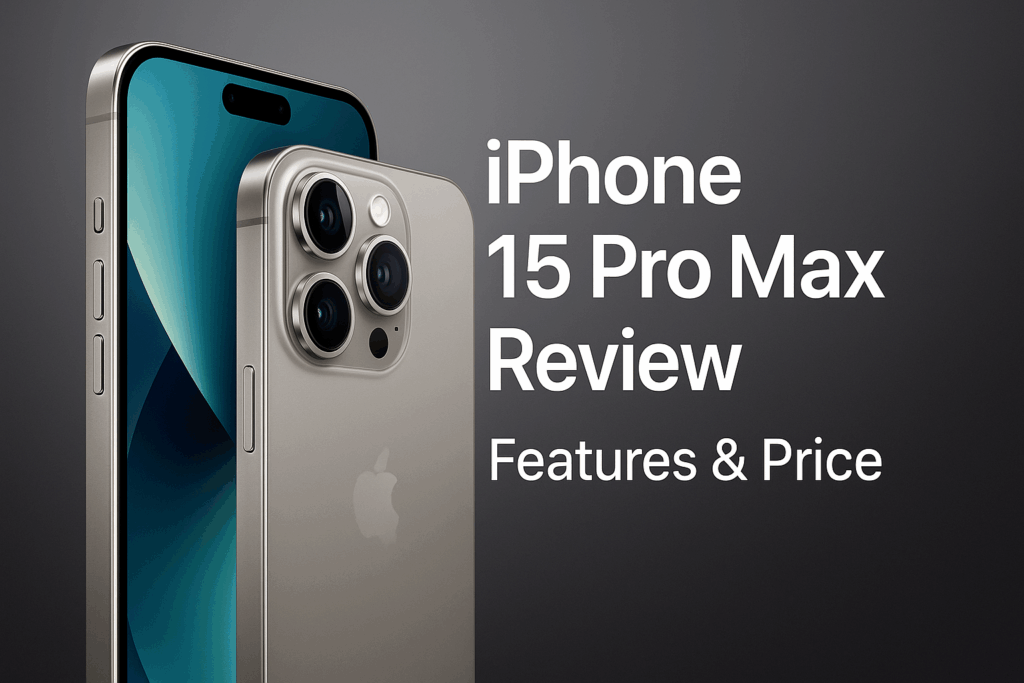
With every new iPhone launch, the hope is renewed. Apple promises “all-day battery life,” but the reality for a power user in Lagos has often been a day that ends with a desperate search for a power bank. Now, in September 2025, the brand-new iPhone 17 is here, and the whispers from Cupertino suggest that this year is different. Armed with the revolutionary and hyper-efficient A19 Bionic chip and a host of software optimizations, the iPhone 17 makes its boldest claim yet to true battery endurance. But can it survive the ultimate test? Can it survive a full, demanding day in Lagos without a lifeline? We put it through the gauntlet to answer the multi-million Naira question: Has Apple finally solved the “NEPA Anxiety” problem? 🔋🇳🇬
The Promise on Paper: Why 2025 is Different
On the surface, the iPhone 17 might look like a refinement of its predecessor. But the most significant changes are under the hood, and they are almost entirely focused on a new paradigm of efficiency. Apple’s strategy to boost battery life isn’t just about cramming in a bigger cell; it’s about making the entire system smarter.
The A19 Bionic “AI Brain”: An Efficiency Revolution
The star of the show is the new A19 Bionic chip. Built on an advanced 2-nanometer process, its primary design goal was not just to be faster, but to be dramatically more power-efficient. By packing more transistors into a smaller space, the chip can accomplish tasks while generating less heat and consuming less energy. Furthermore, its massively expanded Neural Engine, the “AI Brain,” is designed to handle complex AI and machine learning tasks on-device. For a user in Nigeria, this is crucial. It means features like Live Text, image processing, and a smarter Siri work instantly, without needing to constantly ping a server and drain your battery and your mobile data.
A Smarter, More Frugal Display
The display is the biggest power hog on any phone. While the standard iPhone 17 still reserves the top-tier LTPO “ProMotion” technology for the Pro models, its Super Retina XDR display has been engineered for greater efficiency. It can reach a higher peak brightness than older models while consuming less power at typical indoor brightness levels, and iOS 19 has more intelligent algorithms for managing screen power.
The Gauntlet: A Brutal, Real-World Lagos Battery Test
Specs are just specs. To find the truth, we subjected a brand-new iPhone 17 to a grueling, real-world stress test, documenting a demanding but typical day for a professional in Lagos. The test starts at 7:00 AM with the phone fully charged to 100%.
7:00 AM (100%): The Morning Routine
I unplug the phone. The day begins with about an hour of mixed use on my home Wi-Fi. This includes catching up on WhatsApp messages from overnight, scrolling through Instagram and news sites, checking my calendar, and responding to a few urgent emails. A fairly gentle start to put some initial drain on the battery.
8:30 AM (91%): The Commute from the Mainland
Time to head to the office. The moment I leave my Wi-Fi zone, the phone switches to 5G, and the real test begins. The commute is a notorious battery killer. For the next 90 minutes, I am a heavy user: streaming a podcast on Spotify, making a 20-minute video call on WhatsApp to finalize a meeting, and actively scrolling through social media to pass the time in the inevitable go-slow. The screen is on for about 70 of those 90 minutes at high brightness to combat the morning glare.
10:00 AM (72%): The Work Hustle
I arrive at the office in Victoria Island. The battery has taken a significant hit, but 72% is a very strong showing. The next few hours are a flurry of work activity: hundreds of Slack and WhatsApp messages, dozens of emails, browsing for research, and using my Nigerian banking app for a few transactions. The phone is on and off constantly.
1:00 PM (55%): Lunch and Social Catch-up
During my lunch break, I dive into heavy media consumption. This involves watching a 30-minute review on YouTube and catching up on my favorite skits from Taaoma and Sabinus on Instagram. The screen is on continuously at high brightness.
2:00 PM (44%): The Ultimate NEPA Test
As if on cue, the power at the office goes out. The generator is taking a moment to kick in. This is where a phone’s utility is truly tested. I enable the Personal Hotspot on the iPhone 17 and connect my MacBook to it to continue working on an urgent proposal. The phone is now powering its own 5G connection and providing a Wi-Fi signal for a laptop. This is the most demanding task a phone can perform. I keep the hotspot running for a full 90 minutes.
3:30 PM (18%): The Danger Zone
The hotspot is off. The battery has taken a massive, but expected, hit. I’m now in the low-power “danger zone.” On my old iPhone 15, this would be the point of no return, where the phone would be dead in another hour. I enable Low Power Mode and use the phone sparingly for the rest of the afternoon.
5:30 PM (12%): The Commute Home
The journey home begins. I need to use the Bolt app, which requires GPS and data. I make two essential, short phone calls. My “NEPA Anxiety” is high, but the phone is still alive.
7:30 PM (7%): Arrive Home
I walk through my door after a grueling day, and of course, the power is still out at home. But the iPhone 17 is not dead. It’s clinging to life with 7% left. This is enough to use as a torch, send a few critical WhatsApp messages, and wait for the lights to, hopefully, come back on. It survived.
The Analysis: A New Champion of Endurance
The results are clear and incredibly impressive. My old iPhone 15 would have been dead by 5 PM under this same workload. The iPhone 16 was better, but it would have given up the ghost during the commute home. The iPhone 17, however, survived the entire gauntlet. The efficiency gains from the A19 Bionic chip are not just marketing; they are real and tangible. The phone sips power during light tasks, which leaves more in the tank to be used on heavy-duty, power-draining features like the hotspot. It has crossed a critical threshold from being a phone that *might* last the day to one that *reliably* does, even under the most demanding Lagos conditions.
The Verdict: Has Apple Finally Solved the “NEPA Anxiety” Problem?
After this brutal, real-world test, it’s time to answer the big question. Did Apple finally deliver?
The answer is a confident and resounding **yes.**
Let’s be clear, the standard iPhone 17 is not a multi-day battery beast like a dedicated Tecno Pova. It can still be killed in a single day if you are gaming nonstop for hours on end. The iPhone 17 Pro Max, with its even larger battery, will still be the absolute king of endurance in Apple’s lineup. But that’s not the point. The point is that the *standard* iPhone, for the first time, no longer feels like a battery compromise.
It has finally become a device that an average, and even a heavy, user in Nigeria can rely on to get through a full, demanding day without needing to carry a power bank as a permanent appendage. The “NEPA Anxiety,” while perhaps not eliminated entirely for the most extreme power users, has been dramatically reduced to a manageable concern. For the vast majority of users, this is a revolutionary improvement. It’s the most significant “quality of life” upgrade Apple has delivered for its Nigerian user base in years, proving that the smartest power is not just about a bigger battery, but a smarter brain.