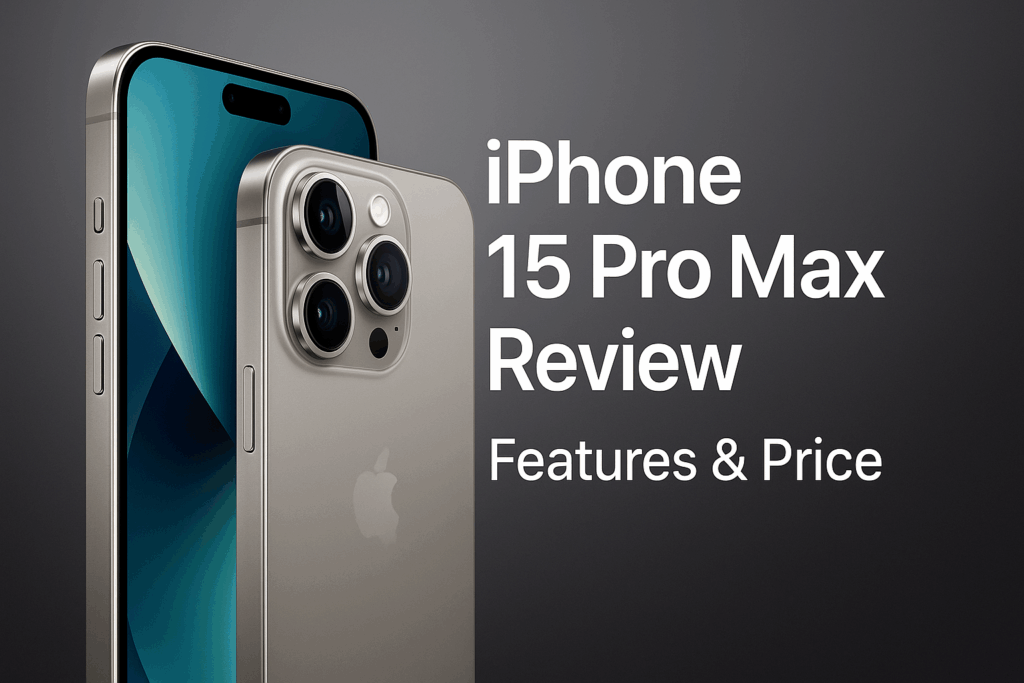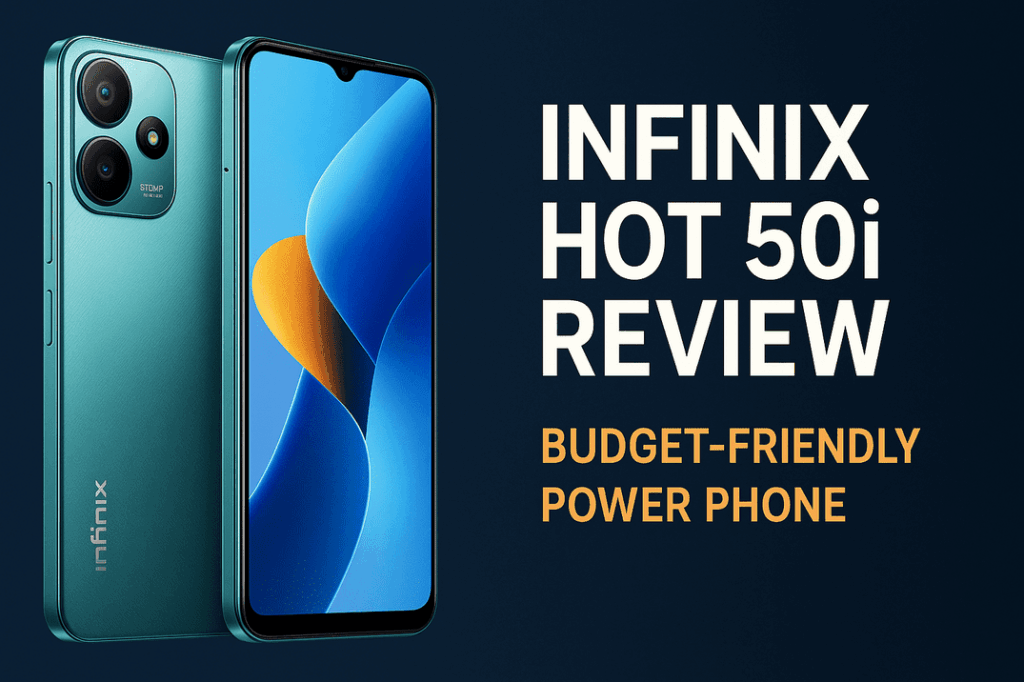
Walk into any electronics store or browse any online marketplace, and you’ll be hit by a tidal wave of specifications, marketing jargon, and a dizzying array of smartphone choices. 100x Space Zoom! 8K video recording! 200-megapixel sensors! AI-powered everything! The manufacturers scream these features from the rooftops, wrapped in slick commercials and presented by charismatic tech influencers, all designed to convince you that this year’s model is not just an upgrade, but a revolution you simply cannot live without.
We’ve been conditioned to believe that more is always better. More cameras, more megapixels, more processing power, more… everything. This relentless upgrade cycle, fueled by a multi-billion-dollar marketing machine, has created a pervasive sense of tech FOMO (Fear Of Missing Out). We look at our perfectly functional one-year-old phone and suddenly see its flaws, all because a newer, shinier object has been dangled in front of us. We start to wonder if our photos are good enough, if our screen is smooth enough, if we’re falling behind the curve.
But here’s a confession from deep within the tech world: most of these heavily marketed features are, for the average person, utterly pointless. They are niche capabilities that sound impressive on a spec sheet but have little to no impact on your day-to-day experience. You are paying a premium for technology you will likely use once or twice for the novelty, and then forget it even exists.
The truth is, the secret to buying a great smartphone that will make you happy for years to come doesn’t lie in chasing the latest, most expensive flagship. It lies in understanding what truly matters. It’s time to cut through the noise, ignore the hype, and focus on the core pillars of the smartphone experience. After years of testing, reviewing, and using hundreds of phones, I can tell you with confidence that there are only three features that truly matter for the vast majority of users. Get these three right, and you’ll have a fantastic device. Get them wrong, and even the most expensive phone will feel like a disappointment.
The Great Illusion: How Marketing Creates False Needs
Before we dive into what matters, it’s crucial to understand the game being played. The smartphone market is saturated. The real, revolutionary leaps in technology happened years ago. The jump from a flip phone to the first iPhone was a revolution. The jump from a blurry 2-megapixel camera to a sharp 12-megapixel one was a revolution. Today, we live in an era of incremental improvements, yet the prices continue to climb.
So, how do companies convince you to spend over $1,000 on a new device every year or two? They create problems you didn’t know you had and sell you the solution. They use terms like “Pro,” “Ultra,” and “Max” to segment the market and create a psychological ladder. If you buy the standard model, you’re implicitly not a “Pro.” It’s a brilliant marketing trick that preys on our desire for the best.
Think about it. When was the last time you genuinely needed to shoot a video in 8K? Most people don’t even own an 8K television to watch it on, and the file sizes are astronomical. How often do you use a periscope zoom lens to take a grainy, pixelated picture of the moon? It’s a cool party trick, but does it justify spending an extra $300?
These features are the technological equivalent of peacock feathers—dazzling to look at but not particularly useful for flying. The industry has become obsessed with winning the spec sheet war, cramming in features just to say they have them, regardless of their real-world utility. Our job, as smart consumers, is to ignore the feathers and look at the engine. It’s time to focus on the core trio of features that form the foundation of a great smartphone experience.
Feature 1: The Engine Room – Performance and Battery Life
This first point is a two-for-one deal, because performance and battery life are two sides of the same crucial coin: the fundamental usability of your device. A phone can have the world’s best camera and a screen that folds in half, but if it stutters when you scroll through social media or dies before you get home from work, it’s a failure. This combination is the engine room of your phone, and it should be your number one priority.
A Performance Level That Just Works
When we talk about performance, we’re not talking about benchmark scores or clock speeds. These are abstract numbers that have very little bearing on how a phone feels to use. What we’re talking about is the lived experience: How quickly do your apps open? Is there a delay when you’re typing a message? Does the interface feel smooth and responsive as you swipe between screens? Does it get bogged down when you have a few apps open at once?
For years, manufacturers have sold us on the idea that you need the absolute latest, top-of-the-line processor to have a smooth experience. This is no longer true. Modern processors, even those in the mid-range category, are incredibly powerful. A good mid-range chipset from the last year or two is more than capable of handling everything the average person throws at it—from social media and web browsing to light gaming and video streaming—without breaking a sweat.
The key is to not overpay for power you will never use. Instead of obsessing over the flagship processor, pay attention to the RAM. RAM (Random Access Memory) is what allows your phone to keep multiple apps open in the background, letting you switch between them seamlessly. In today’s world, 6GB of RAM is a good minimum, but 8GB is the sweet spot that will ensure your phone feels fast and fluid for years to come. Don’t fall for the trap of needing 12GB or 16GB of RAM in a phone unless you are a serious power user who engages in heavy mobile gaming or video editing.
The Non-Negotiable: All-Day Battery Life
If performance is half of the engine, battery life is the other, arguably more important, half. It is the single most critical feature of any portable electronic device. Every amazing feature on your phone becomes completely irrelevant the moment your battery percentage hits zero.
The gold standard, the absolute non-negotiable benchmark for any phone you consider buying, is “all-day battery life.” This doesn’t mean it lasts 24 hours straight. It means you can take your phone off the charger in the morning, use it normally throughout your day—texting, calling, browsing, taking a few photos—and still have a comfortable amount of charge left when you go to plug it in at night. You should never have to suffer from “battery anxiety,” that nagging feeling in the afternoon that you need to find a charger or your phone won’t make it home.
When evaluating a phone’s battery, don’t just look at the capacity number (measured in mAh, or milliampere-hours). While a larger number (e.g., 5,000mAh) is generally better, it’s not the whole story. Software optimization plays a massive role in how efficiently a phone uses its power. This is why iPhones, which often have physically smaller batteries than their Android counterparts, can still achieve fantastic battery life—Apple’s tight integration of hardware and software is incredibly efficient. Always look at real-world reviews from trusted sources that specifically test battery life through a typical day’s usage.
Feature 2: Your Window to the World – The Display
You interact with your phone’s display hundreds, if not thousands, of times a day. It is quite literally your window into your digital life. Every photo you view, every video you watch, and every article you read is experienced through this pane of glass. A poor-quality display can make even the most powerful phone feel cheap and unpleasant to use, causing eye strain and making content look dull and lifeless.
Conversely, a great display elevates the entire experience. It makes everything more immersive, vibrant, and enjoyable. But what makes a display “great”? Again, it’s not about chasing the highest numbers on the spec sheet. It’s about focusing on a few key characteristics that have a tangible impact.
Brightness and Clarity Are King
The two most important aspects of a screen are its brightness and its fundamental clarity. Forget about resolution for a moment. The single biggest frustration with a phone screen is not being able to see it properly outdoors. If you’re trying to reply to a text message or check directions under the bright sun and all you can see is your own reflection, the screen has failed you. Look for phones that advertise a high peak brightness, measured in “nits.” A phone with 1,000 nits or more will generally be very comfortable to use outdoors.
In terms of clarity, the obsession with Quad HD and 4K resolutions on a phone-sized screen is mostly a marketing gimmick. For screens under 7 inches, a standard Full HD (1080p) resolution is perfectly sharp. The human eye can barely distinguish the difference between a 1080p and a 1440p (Quad HD) display at a normal viewing distance. What a higher resolution *does* do, however, is consume significantly more battery power. Stick with Full HD; it’s the perfect balance of sharpness and efficiency.
The One Upgrade That Matters: High Refresh Rate
If there’s one modern display feature that provides a genuinely noticeable and meaningful improvement to the user experience, it’s a high refresh rate. For years, all screens refreshed 60 times per second (60Hz). A high refresh rate screen, typically 90Hz or 120Hz, updates 90 or 120 times per second. This doesn’t make your phone “faster” in terms of processing power, but it makes it *feel* dramatically smoother. Scrolling through web pages, swiping through menus, and watching animations becomes a fluid, buttery-smooth experience that is genuinely pleasant. Once you’ve used a 120Hz screen, going back to a 60Hz screen feels jarring and laggy. The good news is that this feature is no longer reserved for expensive flagships; it has become a standard feature on many excellent mid-range phones, making it an accessible and worthwhile upgrade to seek out.
Feature 3: Capturing Your Life – A Reliable Main Camera
The smartphone camera has become the primary camera for most of the world. It’s the device we use to capture everything from our children’s birthday parties to breathtaking vacation landscapes. It’s an incredibly personal and important feature, which is why manufacturers have turned it into a battleground of specifications. But this is also where some of the most misleading marketing occurs.
You’ve seen the phones with three, four, or even five camera lenses on the back. You’ve heard the talk of 108MP and 200MP sensors. The implication is that more lenses and more megapixels automatically equal better photos. This is fundamentally false.
The Main Sensor Is the Only One That Counts
Here’s the secret: for 95% of the photos you take, you will be using the primary, main camera lens. The other lenses—the ultrawide, the telephoto, the macro—are situational tools. An ultrawide can be fun for capturing wide landscapes or big group shots, and a telephoto can be useful for zooming in on distant subjects, but the main camera is your workhorse. It’s the one you’ll use for portraits, food photos, pet pictures, and everyday snapshots.
Therefore, the quality of that single main sensor and the software processing behind it are infinitely more important than the number of extra, often lower-quality, lenses tacked onto the back. It is far better to have a phone with one outstanding main camera than a phone with five mediocre ones. Don’t be fooled by the “quad-camera” setup on a budget phone; often, two of those lenses are cheap 2-megapixel macro and depth sensors that are practically useless and are only there to pad the spec sheet.
What to Actually Look For
Instead of counting megapixels, look for evidence of great camera performance in real-world reviews. How does the camera perform in tricky lighting situations, like a dimly lit restaurant or at sunset? Does it capture skin tones accurately and naturally? Does it focus quickly and reliably so you don’t miss the moment? The best camera systems, like those found in Google’s Pixel phones and Apple’s iPhones, often use more modest 12MP or 50MP sensors but combine them with world-class computational photography and software processing to produce consistently fantastic photos. That’s what matters: reliability and consistency, not headline-grabbing numbers. Focus on finding a phone with a main camera you can trust to capture a great shot every time you press the shutter button.
Conclusion: Buy Smart, Not More
The path to a great smartphone experience is not paved with more features, but with the right ones. The relentless marketing cycle wants you to feel inadequate, to believe that you need the latest and greatest to keep up. But you don’t. By stepping back and focusing on the three pillars that truly define the day-to-day experience, you can make a smarter, more conscious, and ultimately more satisfying purchase.
So, the next time you’re in the market for a new phone, ignore the noise. Ignore the 100x zoom, the 8K video, and the fourth and fifth camera lenses. Instead, ask yourself these three simple questions:
- The Engine: Does it have smooth, reliable performance and a battery that will confidently last me all day without anxiety?
- The Display: Is the screen bright enough to see outdoors and smooth enough to make scrolling a pleasure?
- The Camera: Does it have a single, high-quality main camera that I can trust to capture my important memories beautifully and reliably?
If the answer to all three of these questions is a resounding “yes,” then you have found a winning device. It doesn’t matter if it costs $400 or $1,400. A phone that nails these three fundamentals will serve you better and make you happier than any overpriced flagship loaded with gimmicks you’ll never use. Stop wasting your money. Buy for your real life, not for a spec sheet.