Being a student in Nigeria is a unique challenge. You’re juggling lectures, endless assignments, a demanding social life, and often, a very tight budget. In this demanding environment, a smartphone is not a luxury; it’s an essential survival tool. It’s your research library, your connection to class group chats, your document scanner, your entertainment hub, and your lifeline to friends and family. But with a budget of ₦150,000, navigating the crowded and confusing Nigerian smartphone market can feel like an exam in itself. Every brand is shouting about big numbers and flashy features, making it incredibly difficult to know which device will actually serve you best.
That’s where this guide comes in. We’ve cut through all the marketing noise to focus on what truly matters for a student in 2025. This isn’t just a list of specs. This is a curated selection of the absolute best smartphones you can buy for under ₦150,000 right now, based on extensive research and an understanding of the real-world needs of a Nigerian student. We’re talking about massive batteries that can survive a full day on campus without seeing a charger, performance that won’t lag when you have multiple research tabs open, and cameras that are good enough for both your school projects and your social life. Let’s find the perfect phone to help you conquer the semester.
What Makes a Great Student Phone in Nigeria? The 2025 Criteria
Before we jump into our top picks, it’s important to establish the criteria. What separates a truly great student phone from a mediocre one at this price point? After considering the daily life of a student, we’ve narrowed it down to four essential pillars:
- The All-Day-and-Night Battery: This is the most critical feature. With the unpredictable nature of the power supply, you need a phone that won’t die on you in the middle of a lecture or during a long commute home. We’re looking for a minimum of a 5000mAh battery, with a preference for even larger capacities and reasonably fast charging.
- Smooth Everyday Performance: A student’s phone is a multitasking workhorse. It needs enough power to handle educational apps, PDF readers, web browsing, social media, and light gaming without frustrating lag. This means a capable processor (like a MediaTek Helio G-series or an entry-level Dimensity chip) and, crucially, enough RAM—at least 4GB, but ideally 6GB or more.
- A Versatile and Capable Camera: You don’t need a professional photography rig, but you do need a camera that is clear enough to scan lecture notes, good enough for video calls, and capable of capturing decent photos of your moments with friends. A reliable main sensor is far more important than gimmicky extra lenses.
- A Big, Usable Screen: You’ll be spending hours reading notes, watching educational videos, and attending online classes. A large, bright screen (ideally with a Full HD resolution) is essential to avoid eye strain and make learning more engaging.
The Top Picks for Students Under ₦150,000
Based on the criteria above, we’ve selected the best of the best. These are the phones that offer the most value, power, and reliability for your money in late 2025.
1. The Battery King: Tecno Pova 7
For the student whose number one fear is seeing that dreaded “low battery” notification, the Tecno Pova series remains the undisputed champion. The Pova 7 continues this legacy with a laser focus on endurance and performance. It’s built for students who are out from morning until night and need a device that can keep up without a single thought about where the next charging port might be.
At its core is a monstrous 6000mAh battery, which is significantly larger than the standard 5000mAh found in most competitors. In real-world terms, this translates to true two-day battery life for a moderate user, and a full, heavy day of use with plenty to spare. You can attend lectures, research in the library, stream videos on your commute, and still have enough power left for the evening. When you do need to charge, the upgraded 45W fast charging is a huge plus, capable of getting you hours of power in just a few minutes. Beyond the battery, the Pova 7 is a performance beast for its price, powered by the gaming-focused MediaTek Helio G99 processor and a generous 8GB of RAM. This combination ensures that everything from multitasking to casual gaming is a smooth, lag-free experience. The massive 6.8-inch FHD+ display with a 120Hz refresh rate makes it a joy for both work and play.
The Catch: All that power and battery comes in a large, heavy package. This is not a slim or lightweight phone. Also, while the cameras are perfectly adequate, photography is not the main focus of the Pova line.
Verdict: If battery life and performance are your top priorities, the Tecno Pova 7 is, without a doubt, the best choice you can make.
2. The All-Rounder: Infinix Hot 50 Play
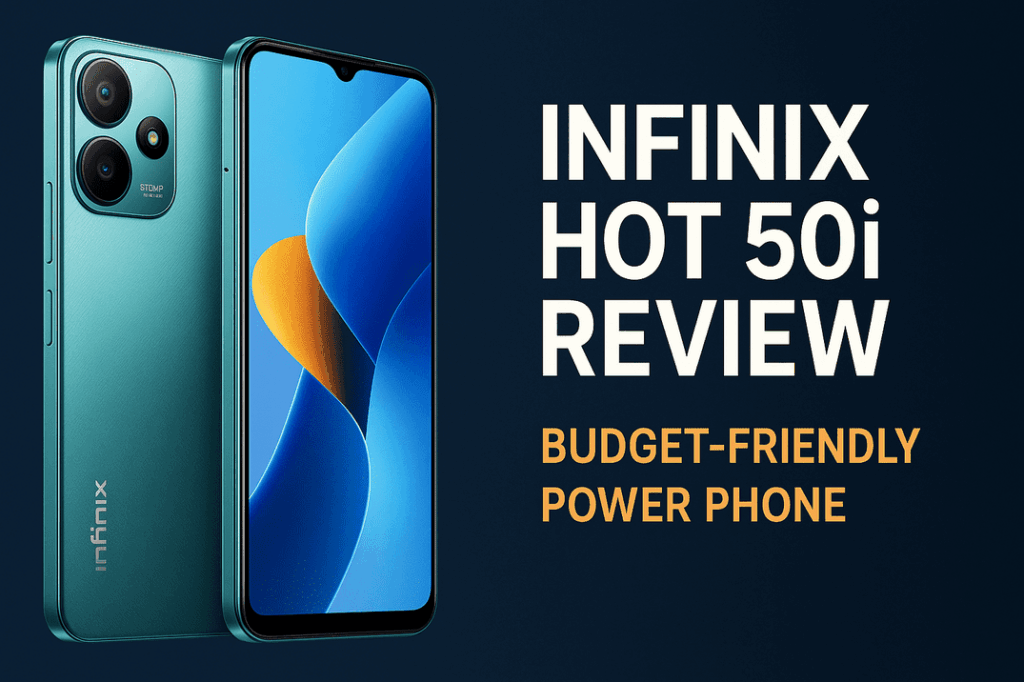
Infinix has built its reputation on offering perfectly balanced devices, and the Hot 50 Play is a masterclass in providing a little bit of everything for a very reasonable price. It’s the ideal choice for the student who doesn’t have one specific priority but wants a phone that is simply great at everything, from its camera to its performance and battery life.
The Hot 50 Play features a reliable 5000mAh battery with dependable 33W fast charging. While not as large as the Pova’s, this battery will comfortably see you through a full day of use. Where the Hot 50 Play shines is in its balance. It is powered by the efficient MediaTek Dimensity 6080 chipset, which not only provides smooth performance for everyday tasks but also brings 5G connectivity to this price point—a great feature for future-proofing your device as 5G becomes more widespread on university campuses. The 50MP main camera is a very capable shooter, producing sharp, vibrant photos that are perfect for your social media feed. The 6.6-inch FHD+ display with a 90Hz refresh rate is both sharp and smooth, making it a great canvas for all your student activities.
The Catch: It’s a jack-of-all-trades but a master of none. The battery life is great but not class-leading, and the performance is smooth but won’t match the gaming prowess of the Pova 7.
Verdict: For the student who needs a reliable, well-balanced device with a good camera and future-proof 5G, the Infinix Hot 50 Play is an incredibly smart and safe choice.
3. The Stylish Choice: Xiaomi Redmi 14C
For the student who values aesthetics and a clean user experience as much as they do raw specs, the Xiaomi Redmi 14C is a compelling option. Xiaomi has a reputation for its excellent build quality and more refined software, and the 14C brings that premium feel to the sub-₦150,000 category.
The first thing you’ll notice about the Redmi 14C is its design. It’s often slimmer, lighter, and feels more polished than its direct competitors, making it a great choice for those who don’t want a bulky phone. Under the hood, it offers a solid 5000mAh battery and a capable processor like the Snapdragon 695, which provides a smooth and efficient experience. The real strength of the Redmi line, however, is often its camera processing. The 50MP main camera, powered by Xiaomi’s excellent imaging software, produces photos with great colour science and dynamic range, often looking more natural and pleasing than the competition. The MIUI software, while a matter of personal taste, is generally cleaner and has fewer pre-installed apps than many of its rivals.
The Catch: The charging speed on the Redmi 14C is typically slower, often capped at 18W, which feels dated in 2025. You also may get slightly less RAM for your money compared to what Tecno and Infinix offer.
Verdict: If you want a phone that feels more expensive than it is, with a clean design and a camera that takes fantastic photos, the Xiaomi Redmi 14C is the stylish and smart choice.
4. The Ultra-Budget Champion: itel S25 Pro
If your budget is stretched to its absolute limit and every single Naira counts, itel is the brand that delivers the most bang for your buck. The itel S25 Pro is a testament to the philosophy of smart compromises, delivering an incredible amount of value at a price point that is often closer to ₦120,000, well under our ₦150,000 ceiling.
The headline feature of the S25 Pro is the sheer amount of memory you get for the price, often boasting 8GB of RAM (expandable with memory fusion) and generous internal storage. This makes it a multitasking workhorse for basic student tasks like research, communication, and social media. It packs a standard 5000mAh battery that provides all-day power, and its processor, likely a Unisoc T616, is more than capable of handling everyday apps without issue. It’s the definition of a reliable, no-frills device that gets the job done without emptying your wallet.
The Catch: To achieve this incredible price, compromises have to be made. The biggest is the screen, which is typically an HD+ display rather than FHD+. This means text and videos won’t be quite as sharp. The processor is also the least powerful on this list, meaning it’s not suitable for serious gaming.
Verdict: For the student on the tightest budget, the itel S25 Pro offers unbeatable value. It’s a reliable tool that proves you don’t need to spend a fortune to get a great smartphone experience.
The Final Verdict: How to Choose the Right Phone for YOU
With so many great options, the best choice comes down to your personal priorities as a student. Here’s a simple breakdown:
- For the absolute best battery life and gaming performance: Get the Tecno Pova 7.
- For the best all-around balance of camera, performance, and features: Get the Infinix Hot 50 Play.
- For a premium design and a great point-and-shoot camera: Get the Xiaomi Redmi 14C.
- If your budget is your number one concern and value is key, get the itel S25 Pro.
- A Note on Samsung: While the Samsung Galaxy A16 exists in this price range, it often offers significantly lower specs. You are paying for the brand name and longer software support, which is a valid choice for some, but on a pure value-for-money basis, the options above are stronger.
Choosing a smartphone is a big decision, but the good news is that in 2025, the sub-₦150,000 market in Nigeria is more competitive and exciting than ever. You can now get a device with a huge battery, a great screen, and smooth performance without breaking the bank. Pick the one that best suits your needs, and you’ll have a reliable partner to help you succeed throughout your academic journey.