In 2025, smartphones are no longer just communication tools—they’re intelligent assistants that learn your habits, anticipate your needs, and deliver powerful experiences without needing to connect to the cloud. As artificial intelligence (AI) becomes a central feature in modern devices, the battle is heating up over which phone delivers the smartest on-device AI. From voice recognition and photo editing to predictive text and real-time translation, AI now plays a role in nearly every user interaction…
The Rise of On-Device AI: Why It Matters
Cloud-based AI has long powered voice assistants and photo categorization, but privacy concerns and latency issues have driven manufacturers to invest in on-device AI. On-device AI means data processing happens directly on your phone, keeping your personal information secure and delivering faster responses without relying on internet connectivity.
Key Metrics for Smart On-Device AI
- Natural Language Processing (NLP): Understanding and responding to voice and text input.
- Computer Vision: Object recognition, scene detection, and smart camera features.
- Contextual Awareness: Adapting to your location, habits, and routines.
- Battery & Performance Optimization: Predicting usage patterns to extend battery life.
- Offline Capabilities: Running features without internet.
Top Contenders: 2025’s Smartest AI Phones
Let’s dive into the top smartphones leading the AI revolution in 2025 and analyze how their on-device AI capabilities stack up.
1. Google Pixel 9 Pro
Google has always been at the forefront of AI innovation, and the Pixel 9 Pro is no exception. Its Tensor G4 chip features a dedicated TPU (Tensor Processing Unit) that delivers exceptional AI performance. Highlights include:
- Live Caption and real-time transcription that works offline.
- Magic Editor for photo editing directly on-device.
- Google Assistant with on-device processing for faster replies.
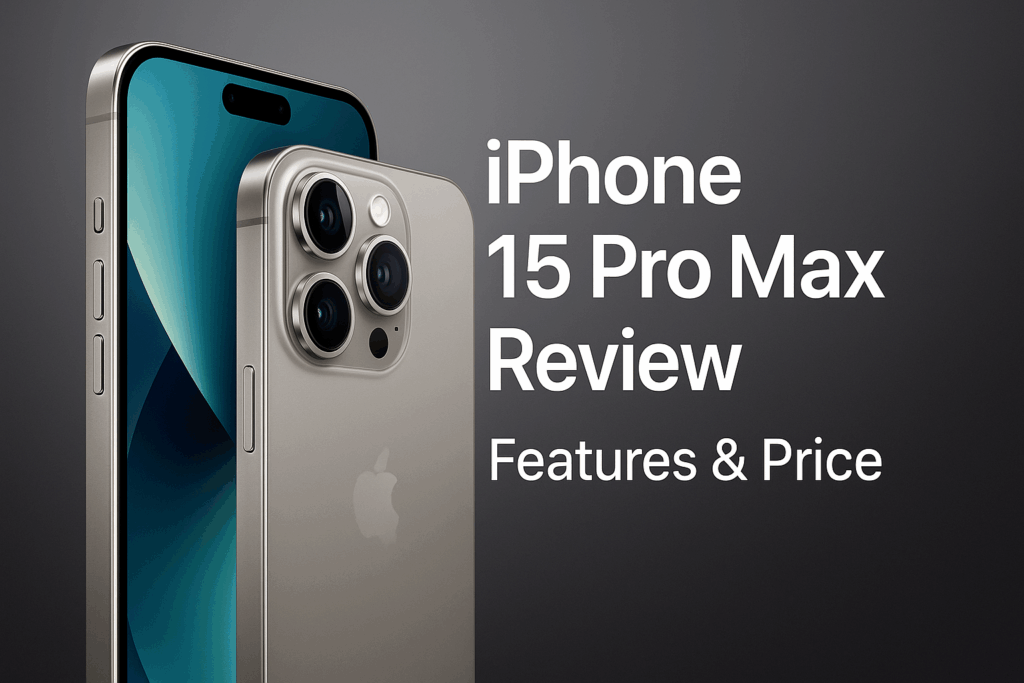
2. Apple iPhone 16 Pro Max
Apple’s A18 Bionic chip powers a suite of AI features focused on privacy and performance. Thanks to Apple Neural Engine (ANE), you get:
- Siri commands executed entirely offline for basic tasks.
- On-device personalized autocorrect and typing predictions.
- Face ID improvements and contextual app suggestions.
3. Samsung Galaxy S25 Ultra
Samsung’s Exynos 2500 and Snapdragon 8 Gen 4 (regional variants) bring AI to the camera, battery, and productivity tools. Key features include:
- Scene optimizer and portrait enhancement in the camera app.
- Battery management through AI-based usage learning.
- Real-time language translation via Samsung Interpreter.
4. OnePlus 13 AI Edition
OnePlus has introduced AI-enhanced OxygenOS features in its AI Edition model, including:
- Smart ambient sensors for adaptive display and sound.
- Offline smart reply and predictive actions.
- New “AI Zen Mode” that curates device usage for mental wellness.
5. Honor Magic6 Pro AI
Honor has stepped up with Magic6 Pro featuring the Magic AI Core. Some highlights:
- Gesture navigation powered by computer vision.
- Multi-language document scanning and conversion without Wi-Fi.
- Intelligent background task scheduling.
Comparative Performance: Benchmarks and Real Use
Benchmark tests show the Tensor G4 leading in AI inference speed, followed closely by Apple’s ANE. However, in real-world usage, Apple’s smooth integration and efficiency often offer the best experience, while Pixel remains the most flexible. Samsung leads in camera AI but is slightly behind in NLP and voice processing offline.
Privacy & Data Handling: Who Does It Best?
Apple remains the privacy champion by ensuring most AI actions stay on the device. Google and Samsung have improved their privacy-focused features but still process some tasks in the cloud. OnePlus and Honor have introduced permission transparency dashboards.
Battery Life and Efficiency Gains
AI helps allocate resources, minimize background drain, and predict usage patterns. Apple and Samsung have seen major gains through adaptive battery systems. Pixel’s “Adaptive Battery” has also matured, keeping background tasks in check using AI.
Offline Features Matter More Than Ever
Whether you’re traveling or saving data, offline AI can be a game-changer. All five phones now support offline voice commands, translation, and some camera features. Apple and Google take the lead here again due to deep system-level integration.
Final Verdict: Which Phone Is the Smartest?
So which phone truly has the smartest on-device AI in 2025?
- For overall intelligence and speed: Google Pixel 9 Pro
- For privacy and seamless performance: iPhone 16 Pro Max
- For camera AI: Galaxy S25 Ultra
- For innovative wellness features: OnePlus 13 AI Edition
- For offline productivity: Honor Magic6 Pro AI
Each of these phones pushes the boundaries of what AI can do without needing the cloud. As 2025 continues, users benefit from smarter, faster, and more secure mobile experiences. It’s not just about specs anymore—it’s about intelligence.