Remember the first time you scrolled through a 120Hz smartphone display? For anyone who leaped the old 60Hz standard, the feeling was nothing short of revolutionary. Suddenly, every swipe, scroll, and animation became incredibly fluid, responsive, and buttery-smooth. It was a tangible, quality-of-life improvement that, once experienced, was impossible to go back from. In 2025, this 120Hz experience has rightfully become the gold standard, the expected baseline for any flagship or even premium mid-range smartphone. It is the hallmark of a modern, high-performance device.
But the world of tech never stands still. As manufacturers search for the next big number to put on their spec sheets, a new challenger has entered the mainstream arena: the 144Hz display. Found on elite gaming phones and the most premium “Ultra” or “Pro” models, it promises an even faster, even smoother experience. This presents a new and important dilemma for the savvy consumer in Nigeria. We know the jump from 60Hz to 120Hz was a game-changer, but is the leap from 120Hz to 144Hz just as significant? Or have we finally reached the point of diminishing returns, where the extra cost doesn’t translate to a real-world benefit? For a buyer in Lagos, where every Naira of a major purchase must be justified, this question is critical. Let’s dive deep into a no-nonsense comparison to help you decide which refresh rate you should choose in 2025.
Refresh Rate 101: A Simple Guide to “Hz”
Before we can compare 120Hz and 144Hz, it’s essential to understand what the term “refresh rate” actually means. The image on your smartphone screen is not a continuous, moving picture. It’s a series of still frames shown in incredibly rapid succession, just like a classic flicker book or a movie reel. The refresh rate, measured in Hertz (Hz), tells you how many times the screen redraws or updates the image every single second.
- 60Hz: The screen updates 60 times per second.
- 120Hz: The screen updates 120 times per second.
- 144Hz: The screen updates 144 times per second.
Why does this matter? The more frames shown per second, the smaller the gap is between each image update. Our eyes and brain perceive this reduced gap as smoother, more fluid motion. This is most noticeable during fast actions. When you quickly scroll down a webpage on a 60Hz screen, the text can appear blurry because your eyes are seeing larger jumps between each frame. On a 120Hz screen, those jumps are cut in half, making the text appear much sharper and the motion feel incredibly smooth. It’s this reduction in motion blur and the feeling of instant responsiveness that makes high refresh rates so desirable.
120Hz: The Established Gold Standard of 2025
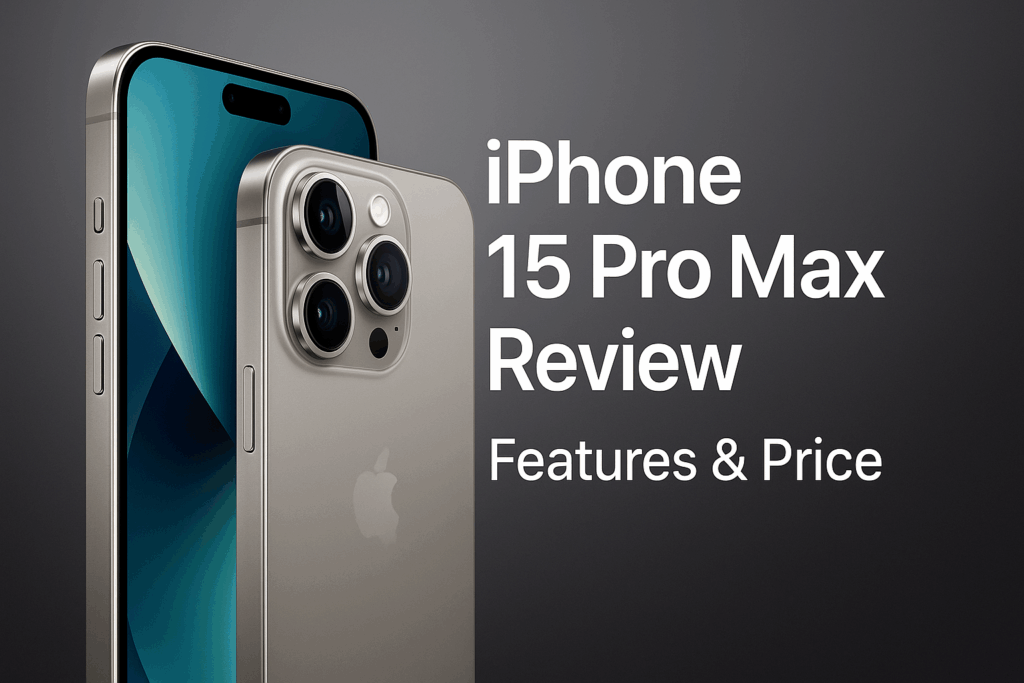
It is crucial to frame this debate correctly. In 2025, a 120Hz display is not the “lower” or “compromise” option. It is the mature, efficient, and widely adopted gold standard for a premium smartphone experience. The vast majority of flagship phones from major brands like Samsung, Google, and Apple (with their ProMotion displays) have settled on 120Hz as the sweet spot for fluidity and performance.
Where 120Hz Delivers a Flawless Experience
- UI Fluidity: Navigating the phone’s operating system is a joy. Opening apps, swiping between home screens, and pulling down the notification shade all happen with a liquid-smooth feel that makes the device feel incredibly responsive.
- Web and Social Media: The most common use case for high refresh rates is scrolling. Whether you’re reading a long article on a news site or flying through your Instagram and TikTok feeds, the 120Hz refresh rate eliminates the distracting judder and blur of older screens.
- High-Performance Gaming: This is a key point. The overwhelming majority of high-performance mobile games, including competitive titles like Call of Duty: Mobile, PUBG, and Apex Legends Mobile, are optimized to run at a maximum of 120 frames per second (fps). A 120Hz screen is the perfect one-to-one match for this content, providing a top-tier, competitive gaming experience with no compromises.
Furthermore, almost all premium 120Hz displays in 2025 use LTPO (Low-Temperature Polycrystalline Oxide) technology. This allows the screen to intelligently and dynamically adjust its refresh rate, dropping as low as 1Hz when you’re viewing a static image to save power. This has made 120Hz not only incredibly smooth but also highly efficient. In short, a 120Hz display provides a true, no-compromise, flagship-level experience.
144Hz: The Challenger Pushing the Limits
So, if 120Hz is already so good, why does 144Hz exist? Found primarily on elite gaming phones and some ultra-premium flagships, 144Hz is all about pushing the absolute limits of mobile display technology. But does this theoretical advantage translate to a real-world benefit?
The Math of Milliseconds
Let’s break down the raw numbers. The amount of time between each frame update is a key metric.
• On a 60Hz display, a new frame appears every **16.67 milliseconds**.
• On a 120Hz display, a new frame appears every **8.33 milliseconds**.
• On a 144Hz display, a new frame appears every **6.94 milliseconds**.
The jump from 60Hz to 120Hz is a massive reduction of 8.34ms—a difference that is easily and immediately perceptible to the human eye. However, the jump from 120Hz to 144Hz is a reduction of just **1.39 milliseconds**. This is an incredibly tiny sliver of time, and this is where the debate truly lies.
The Reality of Human Perception
For the vast majority of people, the 1.39ms difference in frame time is functionally imperceptible. While in a direct, side-by-side laboratory comparison, some people might be able to detect a minuscule increase in smoothness, in normal day-to-day use, it is almost impossible to tell the difference between a 120Hz and a 144Hz display. The feeling of “smoothness” has already been almost entirely achieved at 120Hz. The extra 24 frames per second offered by 144Hz provides a marginal, and often unnoticeable, improvement.
The Content Problem: Where Can You Even Use It?
A screen’s refresh rate is only as good as the content you view on it. For a 144Hz display to offer any benefit, the content itself must be running at 144 frames per second.
- Gaming: This is the primary and, frankly, almost only use case for 144Hz. A small but growing library of highly competitive, often graphically simpler games are being optimized to support 144fps. For an elite, professional-level esports player, the slightly lower input lag and minuscule smoothness increase could theoretically provide a competitive edge.
- The UI: The phone’s own user interface will run at 144Hz, so scrolling through settings or home screens will be as smooth as technically possible.
- Everything Else: This is the crucial part. The vast majority of content is not produced at 144fps. Movies are 24fps. TV shows and YouTube videos are typically 30 or 60fps. For all of this content, a 144Hz screen offers absolutely no benefit over a 120Hz screen.
The Downsides: Cost and Battery
Pushing those extra 24 frames per second comes at a cost. Firstly, it consumes more battery. Even with LTPO technology, the display driver and processor have to work harder to render at 144Hz than at 120Hz, leading to a noticeable increase in power consumption. Secondly, 144Hz panels are more expensive to manufacture, which directly contributes to the higher price tag of the phones that use them.
The Lagos Test: Is It Worth Your Naira?
Now, let’s bring this debate home. For a smartphone buyer in Nigeria, where every feature must be weighed against its cost and practical benefit, how does 144Hz stack up?
For the elite, competitive gamer—the person who is truly trying to climb the leaderboards in games that support 144fps—the extra cost might be a justifiable luxury. It’s a tool for gaining every possible fractional advantage. However, for the other 99% of the population, including serious and passionate gamers, the value proposition quickly falls apart. The extra ₦150,000 – ₦200,000 you might pay for a phone with a 144Hz screen over a comparable 120Hz model is a significant amount of money. That money could be better spent on a device with a larger battery (a far more critical feature in Nigeria), a more versatile camera system, more storage, or simply be kept in your bank account.
Furthermore, in a real-world online gaming session in Lagos, your performance is infinitely more likely to be impacted by your network stability and ping time than by the 1.39-millisecond difference in your screen’s refresh rate. Investing in a better internet connection would provide a much more significant and noticeable “performance upgrade” for your gaming than the jump from 120Hz to 144Hz.
Conclusion: The Smart Choice vs. The Spec Sheet Choice
The choice between 120Hz and 144Hz in 2025 is a classic case of excellent versus overkill.
You should choose a **120Hz** display if you are a savvy consumer who wants a genuinely premium, flagship-level, and incredibly fluid experience. It is the smart, efficient, and cost-effective standard that delivers 99% of the perceivable smoothness with better battery life and a lower price tag. It is, in every practical sense, a flawless experience.
You should only choose a **144Hz** display if you are an elite competitive gamer who plays 144fps-supported titles and needs every possible fractional advantage, or you are an enthusiast who simply wants the highest number on the spec sheet for bragging rights, and the significant price premium is not a factor in your budget.
For the vast majority of users in Nigeria, 120Hz is the undisputed king of smooth performance and value. While 144Hz is an impressive technical achievement, it’s a feature that has surpassed the limits of normal human perception, making it a luxury that provides very little return on a very real investment.