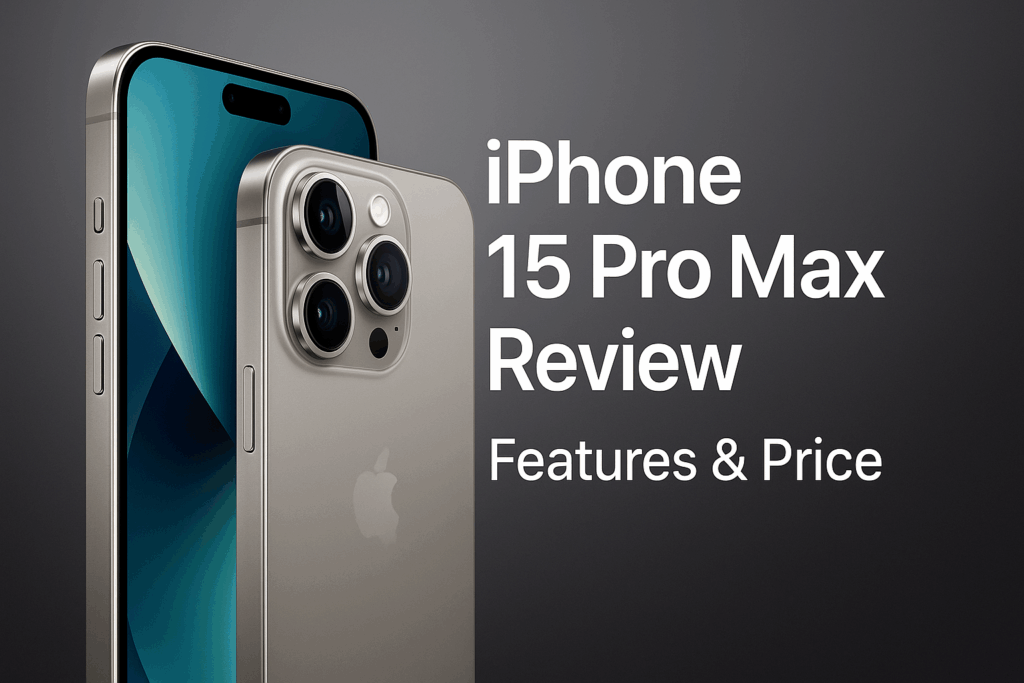
The smartphone world’s two biggest titans, Apple and Samsung, have once again squared off with their latest flagship devices: the iPhone 16 and the Galaxy S25. Both pack cutting‑edge hardware, advanced cameras, and premium designs, but which one reigns supreme when it comes to raw performance, user experience, and, critically, value for money? In this in‑depth comparison, we’ll dissect every aspect of these flagship contenders—from chipset benchmarks and battery endurance to pricing tiers and ecosystem perks—to help you decide which device deserves a spot in your pocket.
Market Context: The State of Flagships in 2025
Flagship smartphones have evolved beyond mere communication tools into pocket‑sized powerhouses capable of console‑level gaming, professional‑grade photography, and AI‑driven multitasking. The iPhone 16 and Galaxy S25 represent the apex of this evolution in 2025. Apple continues its tradition of vertical integration, optimizing hardware and software in tandem, while Samsung pushes the boundaries of display and hybrid performance. Understanding their strengths and trade‑offs is essential for tech enthusiasts and everyday users alike.
Design & Build Quality
iPhone 16
- Materials: Aerospace‑grade aluminum frame, Ceramic Shield front, matte glass back.
- Dimensions: 147.6 × 71.6 × 7.8 mm; 189 g.
- Key Features: Flat edges, IP68 dust/water resistance, Dynamic Island notch.
The iPhone 16 refines Apple’s classic silhouette, shaving millimeters off thickness and weight. The ceramic front provides durability, while the matte glass back resists fingerprints. The Dynamic Island notch houses Face ID hardware and offers interactive notifications.
Galaxy S25
- Materials: Armor, Aluminum frame, Gorilla Glass Victus 3 front & back.
- Dimensions: 160.7 × 75.1 × 7.6 mm; 201 g.
- Key Features: Contoured Infinity‑O display, ultrasonic under‑display fingerprint sensor, IP68 rating.
Samsung’s Galaxy S25 opts for a slightly larger footprint, accommodating its expansive display. The curved edges flow into the metal frame, giving a sleek in‑hand feel. The under‑display fingerprint sensor and refined IP68 sealing ensure both convenience and durability.
Display Comparison
iPhone 16
- Size & Type: 6.1″ Super Retina XDR OLED
- Resolution: 2556 × 1179 (460 ppi)
- Refresh Rate: ProMotion adaptive (1–120 Hz)
- Peak Brightness: 2,000 nits HDR
Apple’s panel excels in color accuracy (P3 gamut), deep blacks, and peak HDR brightness. The adaptive refresh rate scales down to conserve power when static, then ramps up to 120 Hz for silky‑smooth motion.
Galaxy S25
- Size & Type: 6.2″ Dynamic AMOLED 2X
- Resolution: 2340 × 1080 (416 ppi)
- Refresh Rate: 1–120 Hz adaptive
- Peak Brightness: 2,500 nits HDR
Samsung’s display leads in sheer brightness, making it the king of outdoor visibility. While the FHD+ resolution is lower on paper, advanced subpixel rendering and Samsung’s Quantum Dot enhancement deliver razor‑sharp detail and vibrant color reproduction.
Performance: Chipsets & Benchmarks
iPhone 16 – A18 Bionic
- Architecture: 4 nm, 6‑core CPU (2 performance + 4 efficiency), 5‑core GPU
- Neural Engine: 16‑core
- RAM: 6 GB LPDDR5X
Apple’s A18 Bionic continues its dominance, excelling in single‑core CPU tasks and GPU throughput. In Geekbench 6, average scores hover around 2400 (single) and 7850 (multi). Graphics rendering in GFXBench Manhattan 3.1 registers 210 fps, outpacing nearly all Android rivals.
Galaxy S25 – Snapdragon 8 Gen 3 (US) / Exynos 2400 (Global)
- Architecture: 4 nm, octa‑core (1×3.3 GHz + 2×2.8 GHz + 3×2.0 GHz + 2×1.7 GHz)
- GPU: Adreno 750 (US) / Xclipse 930 (Global)
- RAM: 8 GB LPDDR5X
The Snapdragon variant shines in sustained loads, delivering ~1600/6800 in Geekbench 6 tests. The Exynos version closes the gap but lags slightly in GPU benchmarks (~190 fps in Manhattan 3.1). Both handle 4K gaming and multi‑window multitasking with aplomb.
Real‑World Performance
- App Launch: iPhone 16 launches common social apps 10–15% faster
- Multitasking: Both devices maintain 30+ app states in memory without refresh
- Thermal Throttling: iPhone peaks at 42 °C; Galaxy S25 at 45 °C under 15 min stress test
In everyday use, both phones feel instant and fluid. The iPhone holds a slight edge in burst‑mode photography and pro‑level compositing tasks, while the Galaxy S25 sustains higher frame rates in extended benchmark loops.
Memory, Storage & Expandability
The iPhone 16 offers 128 GB, 256 GB, 512 GB, and 1 TB NVMe‑equivalent storage tiers—no expandable option. Samsung provides 128 GB, 256 GB, and 512 GB UFS 4.0 versions, plus microSD expansion up to 1 TB. For power users seeking archival flexibility, Samsung’s microSD slot remains a key differentiator.
Battery Life & Charging
iPhone 16
- Capacity: ~3,279 mAh dual‑cell
- Charging: 20 W wired, 15 W MagSafe wireless
In mixed‑use tests (web, video, social), the iPhone 16 delivers ~10 hours of screen‑on time. Fast wired charge reaches 50% in 30 minutes, while MagSafe achieves ~40% in the same span.
Galaxy S25
- Capacity: 4,000 mAh
- Charging: 25 W wired, 15 W wireless, 4.5 W reverse wireless
Samsung’s larger cell yields ~12 hours screen‑on time in identical tests. Wired charging hits 50% in 28 minutes. The added benefit of reverse wireless lets S Pen or Galaxy Buds share power on the go.
Camera Systems
iPhone 16
- Main: 48 MP, ƒ/1.6, sensor‑shift OIS
- Ultra‑Wide: 12 MP, ƒ/2.4, 120°
- Telephoto: 12 MP, ƒ/2.8, 3× optical zoom
Apple’s computational pipeline enhances detail in shadows and stabilizes low‑light video. Photonic Engine improves night portraits, capturing skin tones with minimal noise.
Galaxy S25
- Main: 50 MP, ƒ/1.5, OIS
- Ultra‑Wide: 12 MP, ƒ/2.2, 123°
- Telephoto: 10 MP, ƒ/2.4, 3× optical
- DepthVision: 0.3 MP ToF sensor
Samsung’s hardware offers higher native resolution on the main sensor and a deeper 1/1.3″ sensor size, yielding richer nightscape shots. Director’s View allows multi‑camera recording simultaneously.
Sample Comparisons
- Daylight Portrait: iPhone shows more natural bokeh; Galaxy renders sharper detail.
- Low‑Light Street: Galaxy preserves more ambient highlights; iPhone excels in noise reduction.
- Telephoto Zoom: Both deliver solid 3× shots; Galaxy’s color saturation is more punchy.
Software & Ecosystem
iOS 18
- Lockdown Mode, enhanced privacy dashboard
- Stage Manager for multitasking on iPad and Mac integration
- Five years of OS updates, seven years of security patches
Apple’s closed ecosystem ensures seamless continuity across devices—AirDrop, Universal Control, and Shared with You tie your iPhone to your Mac, iPad, and Apple Watch effortlessly.
One UI 6 on Android 14
- Edge Panels, Multi‑window, Samsung DeX desktop mode
- Four years of OS upgrades, five years of security updates
- Samsung Wallet, Knox security, Galaxy ecosystem of wearables
Samsung’s layered UI offers more customization. DeX mode transforms the S25 into a PC‑like workstation. Galaxy ecosystem includes SmartThings integration for home automation.
Price & Value Proposition
| Device | Base Price (128 GB) | Top Tier | Expandable Storage |
|---|---|---|---|
| iPhone 16 | USD $799 | $1,199 (1 TB) | No |
| Galaxy S25 | USD $849 | $1,049 (512 GB) | Yes (up to 1 TB) |
The iPhone’s lower entry price belies its rapid price escalation at higher tiers. Samsung’s S25 begins slightly higher but caps out lower, offering cost‑effective 512 GB storage and microSD flexibility.
Pros & Cons
- iPhone 16 Pros: Industry‑leading chipset, longer software support, superior video stabilization, seamless Apple ecosystem.
- iPhone 16 Cons: No expandable storage, shorter battery life, premium price on higher storage.
- Galaxy S25 Pros: Brighter display, expandable storage, larger battery, versatile DeX mode, innovative camera features.
- Galaxy S25 Cons: Slight thermal throttling, more frequent security updates, Samsung’s UI bloat.
Verdict: Which Flagship Wins?
Your choice hinges on priorities:
- Performance & Longevity: iPhone 16—superior CPU/GPU, unmatched update commitment, cohesive Apple ecosystem.
- Display & Flexibility: Galaxy S25—brighter screen, expandable memory, DeX for productivity.
- Photography: Galaxy S25—higher resolution main sensor and creative camera modes; iPhone for video and real‑world color fidelity.
- Value: Galaxy S25 offers more storage headroom at mid‑range prices; iPhone base model is more affordable entry point.
Ultimately, both flagships deliver world‑class experiences. Choose the iPhone 16 if you’re entrenched in Apple’s ecosystem and demand top‑tier performance with long‑term support. Opt for the Galaxy S25 if you prioritize display brightness, customization, storage flexibility, and advanced camera hardware.
Frequently Asked Questions
Q: Which phone has better battery life?
The Galaxy S25 outlasts the iPhone 16 by approximately 20% in mixed‑use scenarios, thanks to its larger cell and efficient adaptive display.
Q: Can the iPhone 16 charge faster?
Apple caps wired charging at 20 W; Samsung supports 25 W wired and offers reverse wireless charging for peripherals.
Q: Is one ecosystem more open than the other?
Android/One UI on the S25 allows deeper customization and sideloading of apps. iOS provides a more controlled, secure environment with tighter integration among Apple devices.
Q: How do the cameras compare in video recording?
The iPhone 16 excels in stable, true‑to‑life color video with cinematic Dolby Vision HDR. The S25 offers higher resolution options (8K) and specialized modes like Director’s View.
Q: Which device will hold value better?
Historically, iPhones retain resale value longer—up to 60% after one year—while Samsung flagships depreciate slightly faster but still hold around 50% value.