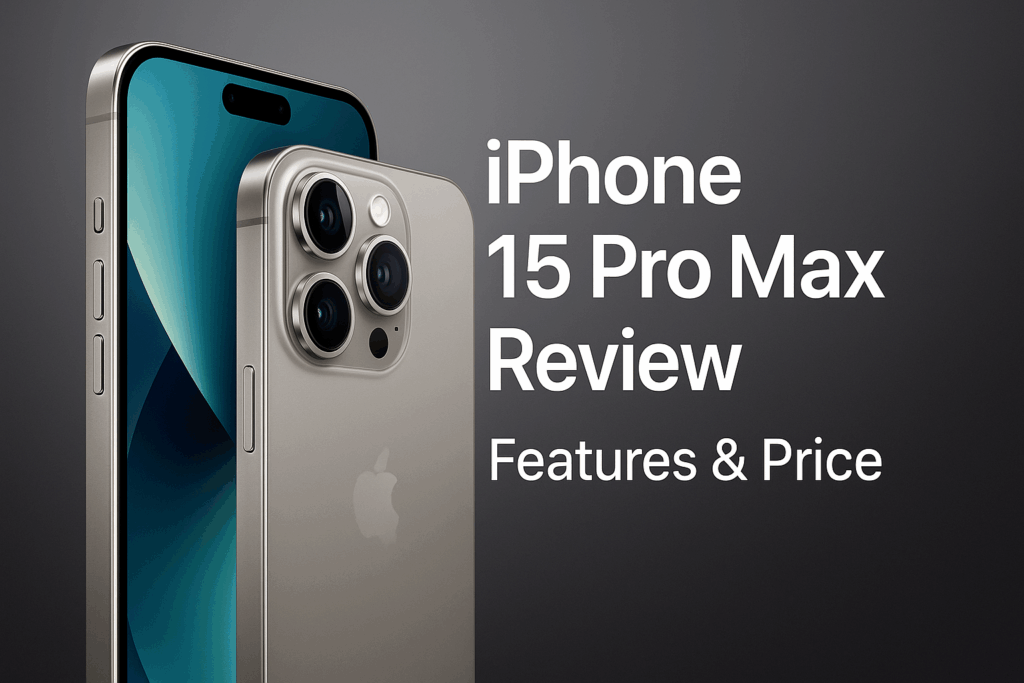
For over a decade, it’s been the holy grail of mobile technology, the ultimate engineering quest: to create a smartphone camera so powerful, so intelligent, and so capable that it could finally and definitively replace a “real” camera. Each year, the claims get bolder, the sensors get bigger, and the software gets smarter. Now, in September 2025, the brand-new iPhone 17 Pro has landed, and the claims are at a fever pitch. With its rumored larger sensor, revolutionary variable optical zoom, and the mind-bending power of the A19 Pro chip, Apple’s latest creation is its strongest challenger yet to the throne of professional photography.
In the other corner stands the old guard, the symbol of professional photography itself: a full-frame DSLR camera with a high-quality prime lens. It represents the laws of physics, the mastery of optics, and the deliberate craft of photography. For years, the battle has been framed as a war between these two philosophies: the iPhone’s computational magic versus the DSLR’s raw optical physics. So, has the day finally come? Has the iPhone 17 Pro’s intelligent brain finally rendered the DSLR’s big body obsolete? For the professional photographer in Lagos, the aspiring creative, and the serious hobbyist, this is more than a technical question; it’s a question of craft, convenience, and value. The war has been long, but is it finally over? 📱📸
The Tale of the Tape: Computational Magic vs. Raw Physics
To understand this battle, you must first understand the weapons each contender brings to the fight. They are both designed to capture light, but they do so in fundamentally different ways.
The iPhone 17 Pro’s Arsenal: The AI Brain
The iPhone 17 Pro’s power is not just in its hardware; it’s in its intelligence. Its primary weapon is the **A19 Pro chip** and its vastly powerful Neural Engine. This chip is the mastermind behind a suite of computational photography technologies like Deep Fusion, Photonic Engine, and Smart HDR 6. In the fraction of a second before you even press the shutter, the iPhone is already analyzing the scene, capturing multiple frames at different exposures, and fusing them together to create a single, perfectly optimized image. This is paired with its most advanced hardware yet: a new, **larger main sensor** (approaching the 1-inch type) that can capture more light, and a groundbreaking **variable optical zoom** lens that offers true optical zoom at multiple focal lengths.
The DSLR’s Arsenal: The Laws of Physics
The DSLR’s power comes from its sheer physical advantages. Its primary weapon is its massive **full-frame sensor**, which is physically more than ten times larger than the sensor in the iPhone. A larger sensor can capture vastly more light, which translates to cleaner images, better dynamic range, and a more natural look. Its secondary weapon is its **interchangeable lens system**. The ability to mount a high-quality prime lens, like a 50mm f/1.8, gives the photographer unparalleled control over depth of field and image quality. The DSLR doesn’t need to “compute” a perfect image; it is physically built to capture it.
Round 1: The Daylight Portrait – Aso Ebi Challenge
Our first test is a classic Nigerian scenario: a wedding guest in vibrant, intricately detailed Aso Ebi, shot outdoors in bright daylight. The goal is to test detail, colour, and that all-important background blur (bokeh).
The **iPhone 17 Pro** produces a stunning, instantly impressive shot. Its new larger sensor captures incredible detail in the fabric, and the A19 Pro’s latest Smart HDR perfectly balances the bright Nigerian sun with the shadows on the subject’s face. The software-based Portrait Mode is now almost flawless, with incredibly precise edge detection around the complex gele. The result is a sharp, vibrant, and perfectly exposed photo that is ready to be shared on Instagram in seconds.
The **DSLR**, however, plays a different game. Paired with a 50mm f/1.8 prime lens, the massive full-frame sensor creates a breathtakingly beautiful and **natural depth of field**. The background melts away into a creamy, dream-like blur that is optically pure. The roll-off from the sharp subject to the blurred background is more gradual and organic than what even the best software can replicate. The colours are more nuanced, and the raw file contains a huge amount of data for professional editing. It feels less like a snapshot and more like a work of art.
The Verdict: A narrow win for the **DSLR**. While the iPhone 17 Pro is 95% of the way there and produces a more “finished” image straight out of the camera, the pure optical quality and magical, natural bokeh of the DSLR still have a professional edge that a trained eye will always appreciate.
Round 2: The Low-Light Test – An Owambe Party at Night
Our next test is in a classic, challenging environment: a dimly lit event hall for an owambe, filled with moving people and chaotic, colourful lighting.
This is the **iPhone 17 Pro’s** home turf. Its computational brain goes into overdrive. When you press the shutter, Night Mode activates, capturing multiple frames over a second or two. The A19 Pro then analyzes these frames, aligns them, intelligently brightens the scene, drastically reduces image noise, and enhances the colours. The result is a shockingly bright, clean, and vibrant photograph that often looks better than the scene did to the naked eye. It’s effortless magic.
The **DSLR** struggles in this environment without user skill. To get a bright enough shot, the photographer has to make a difficult choice: either crank up the ISO, which introduces ugly digital noise, or use a slower shutter speed, which will result in blurry images of the dancing guests. A skilled professional with a flash can certainly get a great shot, but it requires technical knowledge, extra equipment, and deliberate effort. For a spontaneous moment, it’s a far greater challenge.
The Verdict: A decisive victory for the **iPhone 17 Pro**. For capturing spontaneous moments in challenging low-light situations, the iPhone’s computational magic is simply more reliable and produces a better result for 99% of users, with zero effort required.
Round 3: The “Pro” Work – A Planned Photoshoot
For our final test, we move to a controlled environment: a planned studio shoot for a professional headshot, where lighting is controlled and ultimate image quality is the only goal.
The iPhone 17 Pro can produce a fantastic result. Shooting in **ProRAW** format gives you a huge amount of flexibility for editing, and the image quality from the new main sensor is excellent. You can absolutely get a professional-quality, usable headshot with the iPhone.
However, this is the **DSLR’s** kingdom. The massive full-frame sensor provides superior dynamic range, more subtle gradations in colour and tone, and a level of detail that still holds a slight edge. The ability to change lenses—to an 85mm portrait lens for perfect compression, or a 100mm macro lens for product shots—gives the photographer ultimate creative control. The ergonomics of a proper grip, a physical viewfinder, and tactile dials make it a far better tool for a long, deliberate shooting session. The DSLR is an instrument of craft, and in a controlled environment, that craft shines through.
The Verdict: A landslide win for the **DSLR**. When it comes to planned, professional work where maximum image quality and creative control are the priorities, the dedicated camera is still the undisputed king.
Conclusion: A Truce, Not a Victory. The War is Obsolete.
So, has the iPhone 17 Pro finally won the war against the DSLR? The answer is a definitive **no**. But more importantly, the question itself is now obsolete. The “war” is over because they are no longer competing for the same territory. They have evolved into two different, highly specialized tools for two different jobs.
The **iPhone 17 Pro has won the war for everyday photography.** For 95% of the photos we take—of our family, our food, our travels, our social lives—the iPhone is now so incredibly good that a dedicated camera is no longer a necessity. Its convenience is unbeatable, and its computational brain is a superpower in difficult lighting. It is, without a doubt, the greatest everyday camera ever made.
The **DSLR remains the undisputed king of intentional, professional photography.** It is a specialist’s instrument. For the wedding photographer who needs to deliver flawless prints, the commercial photographer who needs ultimate resolution, or the fine art photographer who demands total creative control, the DSLR is still the superior tool. It’s for the craft, not just the capture.
For the modern creative in Nigeria, the debate is no longer about replacement; it’s about partnership. Your iPhone 17 Pro is the perfect “A” camera for your daily life, your social media content, and your spontaneous video work. Your DSLR is your “B” camera for those planned shoots where every single pixel matters. The war is over, and the winner is the photographer, who now has two incredible, specialized tools to tell their stories.