The annual ritual is a familiar one for tech lovers across Nigeria. A major brand—be it Samsung, Apple, or Google—unveils its latest flagship smartphone. The presentation is dazzling, full of talk about next-generation processors, revolutionary AI features, and cameras that promise to see in the dark. Then comes the price tag. In 2025, seeing a new flagship like the Galaxy S25 Ultra or iPhone 17 Pro launch for well over ₦2,500,000 is no longer a surprise, but it remains a staggering figure. For that price, you could make a serious down payment on a car or invest significantly in a business. A deep sigh follows. The heart wants the best, but the wallet, and common sense, scream for a more rational approach.
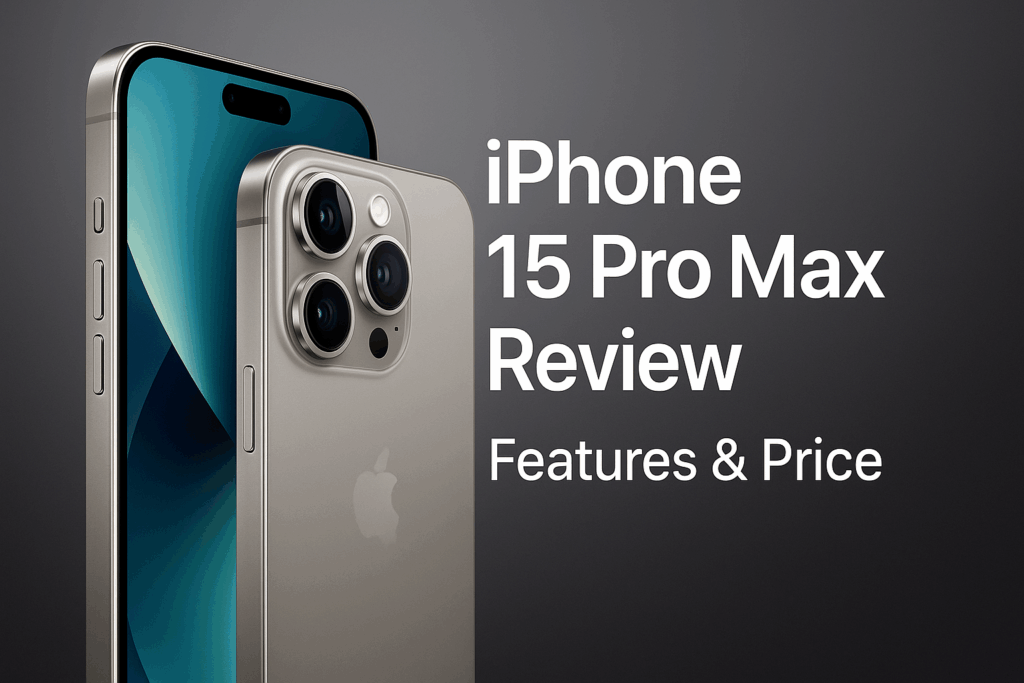
This is where the savvy tech consumer’s eye begins to wander. You start looking at last year’s legend, the still-gorgeous iPhone 15 Pro Max, or the powerhouse Galaxy S24 Ultra. They are available now, not as “London-used” devices of questionable origin, but as “refurbished” flagships, for a fraction of the cost. This sparks the ultimate debate: is it smarter to buy a brand-new, top-of-the-line 2025 smartphone, or can a professionally restored, pre-owned flagship from a year or two ago deliver an experience that’s just as good where it truly matters? This isn’t just about saving money. It’s a deep dive into value, performance, and understanding what “premium” really means in our daily lives. Let’s settle the score and find out if yesterday’s champion can still compete in today’s demanding arena.
First, Let’s Define Our Terms: “Refurbished” is Not “Used”
Before we begin our duel, it’s critical to clarify one thing, especially in the Nigerian market where the term “London-used” is so common. A refurbished phone is not the same as a used phone you buy from a random stall in Computer Village. The difference is quality control and certification.
- A used phone is sold as-is. It comes with all the existing wear and tear, a potentially degraded battery, and no guarantee of functionality or longevity. It’s a gamble.
- A refurbished phone, when purchased from a reputable source, has been through a rigorous professional process. It has been tested for functionality, repaired if necessary with certified parts, had its data wiped, and has been cosmetically cleaned. Most importantly, it often comes with a new battery or a guarantee of high battery health, and it includes a warranty. It’s a product that has been restored to a specific standard.
For this comparison, we are only considering these high-quality, certified refurbished devices against their brand-new counterparts.
The Contenders: A Tale of Two Eras
To make this a fair fight, let’s create profiles for our two competitors.
The New Champion: The 2025 “Stellar X Pro”
This is our stand-in for any brand-new 2025 flagship. It’s the latest and greatest, boasting specs that sound like they’re from the future.
Key Features:
• Next-generation processor (e.g., Snapdragon 8 Gen 4 or Apple A19 Bionic).
• Advanced on-device AI for real-time translation and photo editing.
• An ultra-bright display, pushing 3,500 nits peak brightness.
• A cutting-edge camera system with a 200MP+ sensor and incredible zoom capabilities.
• The latest software version straight out of the box, with a full 5-7 year support window.
• Price: A wallet-clenching ₦2,500,000+.
The Refurbished Legend: The 2023 “Galaxy S23 Ultra” or “iPhone 14 Pro Max”
This represents a top-tier flagship from two years ago, now available as a certified refurbished device. It was once the king of the hill, and its specs are still formidable.
Key Features:
• A powerful, proven processor (e.g., Snapdragon 8 Gen 2 or Apple A16 Bionic).
• A beautiful, high-resolution OLED display with a 120Hz refresh rate.
• A highly versatile and critically acclaimed camera system.
• Guaranteed battery health of 85% or higher.
• A significant software support window still remaining (e.g., 3-5 years).
• Price: A much more accessible ₦1,000,000 – ₦1,300,000.
Round 1: Performance – Does “Good Enough” Still Feel Fast?
On paper, this seems like an easy win for the 2025 Stellar X Pro. Its new chipset will undoubtedly post higher numbers in benchmark apps like AnTuTu and Geekbench. But the most important benchmark is real life. Can you actually *feel* that difference in your day-to-day use in Lagos?
For the vast majority of tasks that make up 95% of our smartphone usage, the answer is a resounding no. The Snapdragon 8 Gen 2 and Apple A16 Bionic chips in our 2023 legends are still phenomenally powerful. Opening WhatsApp, scrolling through Instagram and TikTok, switching between your banking app and Gmail, Browse the web—all of these actions are already instantaneous. The law of diminishing returns has hit smartphone performance hard. Both phones will feel incredibly fast and fluid. You simply cannot perceive a difference when an app opens in 0.2 seconds versus 0.15 seconds.
Where the new chip gains an edge is in very specific, high-demand scenarios. If you are a hardcore gamer who needs to play titles like *Genshin Impact* or *Call of Duty: Mobile* at the absolute maximum graphics settings with the highest possible sustained frame rate, the 2025 flagship will perform better. Its advanced cooling and superior GPU will handle thermal throttling more effectively over long sessions. Likewise, for heavy video editing or complex AI tasks, the extra horsepower is noticeable.
Verdict: For the average and even the power user, a refurbished 2023 flagship is more than fast enough. Its performance is not just “good enough,” it’s still objectively excellent and will feel that way for years. The extra speed of the 2025 model is a luxury, not a necessity, for most users.
Round 2: The Camera Shootout – Chasing Pixels or Pictures?
The camera is often the biggest selling point of a new flagship. The 2025 Stellar X Pro likely boasts a massive 200MP+ sensor and some form of “AI-powered” 150x zoom. These numbers are impressive marketing tools, but do they translate to better pictures for the average person?
In good daylight, the differences can be surprisingly minimal. The camera systems in the iPhone 14 Pro and Galaxy S23 Ultra were already at the pinnacle of mobile photography. They feature large sensors, high-quality lenses, and sophisticated image processing that produce stunning, vibrant, and sharp photos. When you view these pictures on a phone screen or share them on Instagram, Facebook, or WhatsApp—where they will be compressed anyway—it is incredibly difficult to distinguish between a photo taken with a 2023 flagship and a 2025 one.
The real advantages of the newer camera system lie at the extremes. The 2025 model will almost certainly be better in very low-light conditions, capturing brighter and cleaner images with less noise. Its video capabilities might also be more advanced, perhaps offering smoother stabilization or niche features like 8K video recording. The super-long-range zoom is a fun party trick, but the practical image quality at those extreme ranges is often questionable and not something most people use daily.
Verdict: The camera on a refurbished 2023 flagship is still a top-tier, incredibly versatile system that will outperform any brand-new mid-range phone. For the vast majority of photos and videos you will take, it is more than capable of producing spectacular results. The 2025 model offers incremental improvements, primarily for low-light specialists and video professionals.
Round 3: Battery & Software – The Real-World Worries
This is where the practical concerns with refurbished devices come to the forefront, and where careful purchasing is key.
The Battery Question: A battery is a consumable component; its health degrades over time. This is the biggest risk with a used phone. However, a certified refurbished phone mitigates this risk. Reputable sellers will test the battery and guarantee a minimum “battery health” percentage, typically 85% or higher. Some may even install a brand-new battery. While a refurbished phone’s battery life might be slightly less than a brand-new one due to its older, less-efficient chip, a device with 85-90% battery health will still comfortably last most users a full day. This is a clear win for the new phone, but the disadvantage for the refurbished model is manageable if you buy from the right place.
The Software Support Window: A 2023 flagship has already used up two years of its software support life. For an iPhone, this is less of a concern, as Apple typically provides 6-8 years of iOS updates. An iPhone 14 Pro will still be getting major updates well into 2028 or 2029. For Android, the window is shorter. A Samsung S23 Ultra, with its excellent policy of 4 years of OS updates and 5 years of security patches, will receive major updates until 2027 and security patches until 2028. This is still a very long time. For a user who realistically upgrades their phone every 2-3 years, this is often a complete non-issue.
Verdict: The new flagship has a clear advantage in battery health and the length of its software support. However, by purchasing from a certified refurbisher with a battery guarantee and understanding the realistic support timeline, these “worries” become calculated trade-offs rather than deal-breakers.
The Lagos Factor: A Buyer’s Guide to Refurbished Phones in Nigeria
Buying a refurbished phone in Nigeria requires extra diligence. The market is flooded with devices of varying quality, and it’s important to protect yourself. Going for the absolute cheapest “London-used” deal at a random market stall is a recipe for disaster. To get a truly reliable device, you need to buy from a seller who offers accountability.
Here is your checklist when shopping:
- Demand a Warranty: This is non-negotiable. A reputable seller should offer a minimum of a 3-6 month warranty covering hardware faults. This shows they stand behind their product.
- Ask for Battery Health Proof: For iPhones, they can show you the Battery Health percentage in the settings. For Androids, they can use an app like AccuBattery. Insist on a device with 85% or higher health.
- Confirm a Return Policy: What happens if you get home and find a problem? A good seller will offer a 7-14 day return or exchange policy.
- Check Reputable Platforms: Look for trusted sellers on platforms like Jumia (look for high ratings and reviews), or specialized, trusted Instagram vendors known for quality. International sites like Back Market or Rebold are also options if they ship to Nigeria, as they have strong certification processes.
Conclusion: The Verdict – Who Should Buy What?
After this extensive duel, the conclusion is clear: there is no single winner, only the right choice for a specific type of consumer.
The Case for the New 2025 Flagship
You should buy the brand-new flagship if you are a “pro” user or a dedicated tech enthusiast. If your work or passion involves heavy mobile gaming, professional video production, or using demanding AI applications, the performance headroom of the latest chip is a real benefit. It’s also for the person who wants the absolute longest possible software support window and the peace of mind that comes with a 100% new battery and a full manufacturer’s warranty, and critically, has the budget to comfortably afford it.
The Case for the Refurbished Flagship
You should buy a high-quality, certified refurbished flagship if you are a smart, value-oriented consumer. This is the “smart money” choice. For 50-60% of the price, you are getting 95% of the premium experience. You get a stunning 120Hz OLED display, flagship-level performance that feels indistinguishable in daily use, and a world-class camera system that still produces breathtaking photos and videos. This choice allows you to enjoy the luxury and power of a top-tier device without the crippling financial outlay. In a market like Nigeria, this value proposition is almost unbeatable. It’s the choice for the person who wants to feel like they have the best, without having to pay for the marginal, often imperceptible, benefits of being on the absolute cutting edge.
In the end, while the 2025 flagship wins on paper, the refurbished legend often wins on practicality. A high-quality refurbished phone doesn’t just match today’s top performers in the ways that count; it represents a more intelligent and accessible way to own incredible technology.